English
 简体中文
简体中文 VIETNAM-IMMI.ORG


Last Update: Saturday December 06, 2025
Vietnam remains one of Southeast Asia’s most captivating destinations, whether you are here for the street food, the business opportunities, or the lifestyle. The good news? In 2025, the country is more accessible than ever. With expanded e-visa policies and flexible long-term options, entering Vietnam has become much smoother. However, with so many acronyms—TRC, VOA, E-Visa—it can get a little confusing.
This guide cuts through the noise. We will walk you through the most popular visa options for 2025, from short holiday visas to long-term residency cards, helping you decide exactly which one fits your travel plans.
1. Overview of Vietnam’s Visa System in 2025
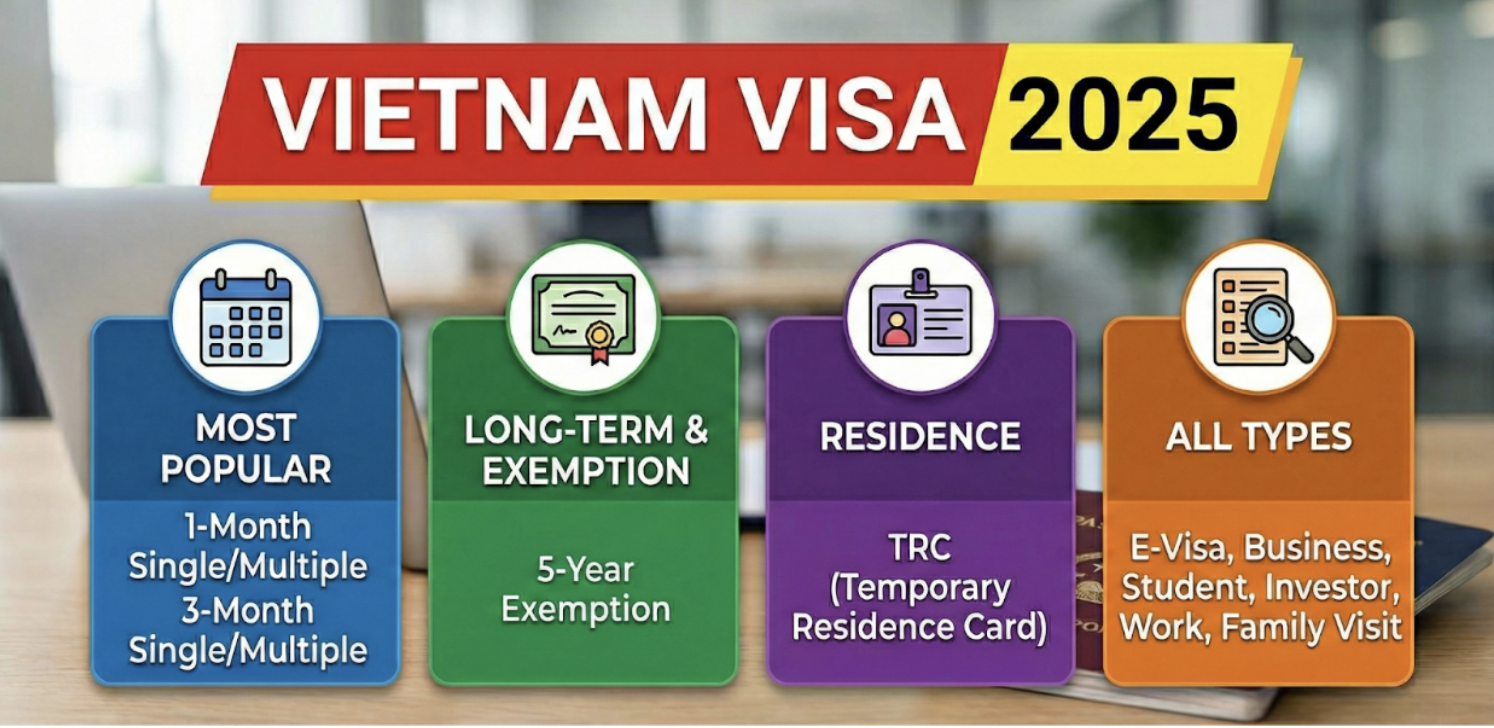
Vietnam’s immigration system has modernized significantly. Gone are the days of complicated paperwork for simple trips. Today, the system generally falls into four categories:
-
Short-Term Tourists: 30 to 90-day stays
-
Business Travelers: Professionals needing multiple entries.
-
Family Visits: Special options for Overseas Vietnamese (Viet Kieu).
-
Expats & Investors: Long-term residence permits.
Since the major policy updates in late 2023, the E-Visa has become the gold standard for most travelers, offering up to 90 days of validity.
2. Visa Options for 1-3 Month Stays
2.1 The E-Visa (The Best Choice for most of Travelers)
This is the modern, digital standard for entering Vietnam. It works for both Tourists and Business travelers and is valid for up to 90 days.
-
How it works: You apply online, pay the fee, and receive a digital visa code by email. No need to visit an embassy.
-
Duration: Flexible options for 30 days (1 month) or 90 days (3 months).
-
Entry Types:
-
Single Entry: You enter Vietnam once. If you leave, the visa is finished.
-
Multiple Entry: You can enter and exit Vietnam as many times as you like during the visa's validity.
-
For Business Travelers: It is simpler than the traditional business visa because it often does not require a complex sponsorship letter for short-term stays.
-
Processing Time: Usually 4–5 working days.
2.2 Visa-on-Arrival (VOA)
This was a popular choice. In 2025, it is primarily an emergency solution for travelers who forgot to apply for an E-visa or have a last-minute flight.
-
How it works: You cannot just show up at the airport. You must first pay an agency in Vietnam to get a "Visa Approval Letter" (processed in 2-4 hours for emergencies). You present this letter at the airport to get your visa stamp.
-
Cost: Besides the service fee if you apply with the agency, there is also the stamping fee (approx. $25 for single entry–$50 for multiple entry pay in cash) at the airport.
3. 5 years Visa Exemption
The Vietnam 5-Year Visa Exemption is one of the easiest and most flexible ways for people with Vietnamese roots—and their families—to travel back to Vietnam. Instead of applying for a new visa each time, this certificate lets you enter and exit Vietnam freely for five full years, with each visit lasting up to 180 days. For many overseas Vietnamese, it’s the perfect long-term solution for staying connected with family, managing property, or simply visiting home more often.
3.1 Who Can Apply for the 5-Year Visa Exemption?
According to Decree No. 82/2015/ND-CP, the following people are eligible:
-
Overseas Vietnamese (those who once held Vietnamese nationality or are of Vietnamese origin).
-
Spouses and children of overseas Vietnamese.
-
Spouses and children of Vietnamese citizens living abroad.
In short, if you are Vietnamese by heritage or part of a Vietnamese family, this exemption gives you a simple, long-lasting, and convenient way to stay connected with Vietnam.
3.2 Want an Easy, Stress-Free Application?
If you prefer a convenient and straightforward process with minimal paperwork, you can apply for the 5-Year Visa Exemption through our service. We simplify everything—from document preparation to submission—so you can receive your exemption without hassle.
You can visit the following link for more details and step-by-step guidance: https://vietnam-immi.org/5-years-visa
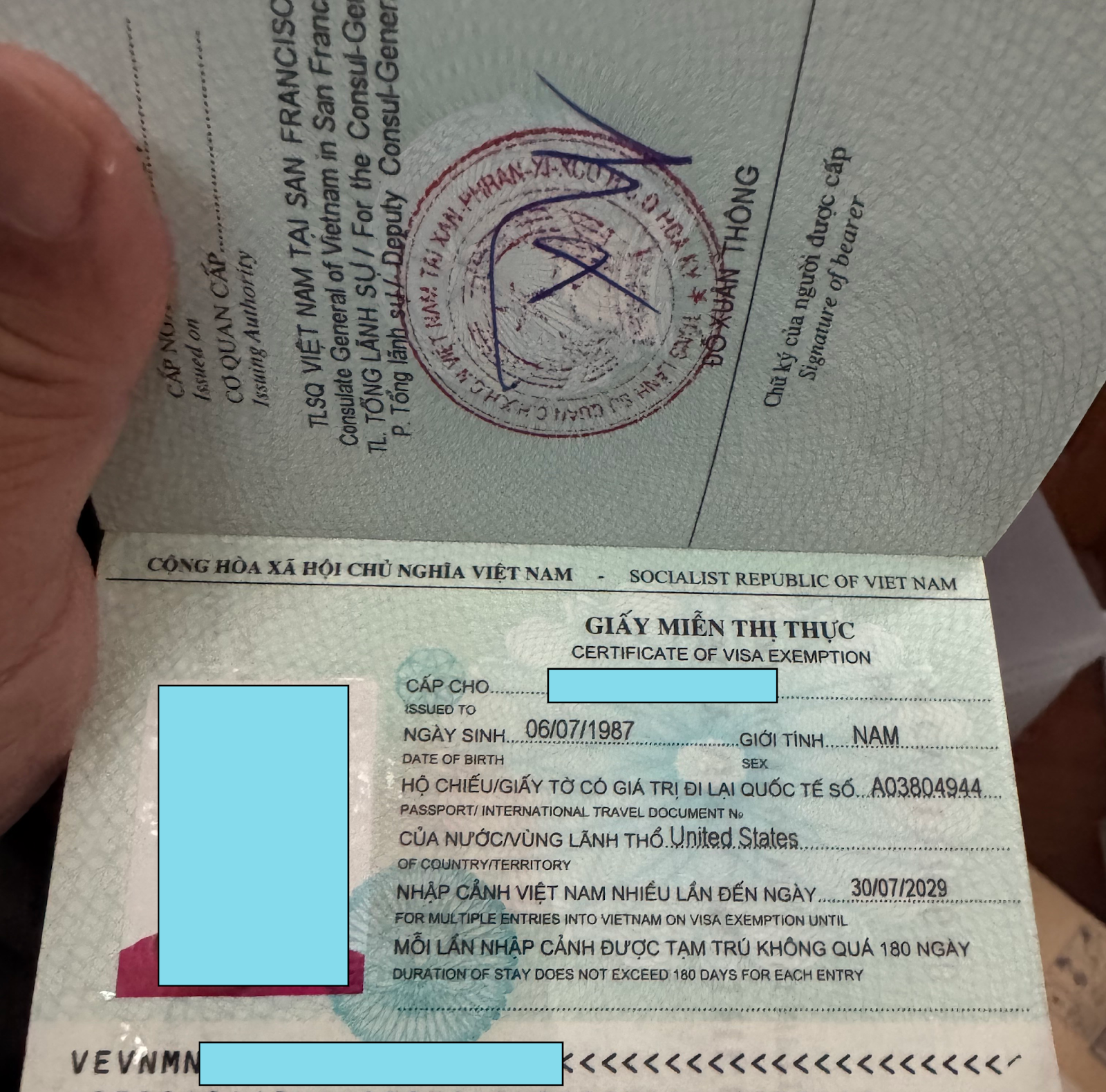
Photo: Collected
4. The Temporary Residence Card (TRC)
If you plan to live in Vietnam for years rather than months, a tourist visa won't cut it. You need a Temporary Residence Card (TRC). Think of this as your Vietnamese ID card—it replaces your visa entirely.
Why get a TRC?
-
Stability: Valid for 2 to 5 years (no more visa runs).
-
Convenience: Makes opening bank accounts, signing leases, and getting internet contracts much easier.
-
Freedom: Unlimited entry and exit.
Popular TRC Categories
-
DT (Investor): For foreigners who start a company or invest capital in Vietnam.
-
LD (Labor): For employees who have a valid Work Permit.
-
TT (Dependent): For the husband, wife, or child (under 18) of a TRC holder.

Photo: Collected
5. Conclusion
Vietnam’s visa system in 2025 is more flexible, modern, and traveler-friendly than ever. Whether you’re planning a short vacation, a business trip, a long-term stay, or returning to your roots as an overseas Vietnamese, there is now a visa option tailored to your needs. The expanded e-visa makes 30- and 90-day stays effortless, while the 5-Year Visa Exemption offers unbeatable convenience for those with Vietnamese heritage. And for anyone looking to live or work in Vietnam long term, the TRC provides stability, freedom, and the benefits of semi-resident status.
With clearer rules and more digital processes, entering Vietnam has never been easier—giving travelers more time to explore, connect, and enjoy everything the country has to offer.
Whether you need a fast visa, airport fast track, private car, or eSIM, Vietnam-Immi.org is here 24/7 to support your trip.
Whatsapp: +84379522522
Hotline: +84.379.522.522
Email: [email protected]